For centuries, mastery in complex STEM disciplines—from cardiovascular surgery and aerospace engineering to subterranean geology and molecular biochemistry—demanded immense financial resources, high-risk physical apprenticeships, and access to rare physical specimens. A surgical trainee could not rehearse a delicate pediatric neurosurgery a hundred times before entering the operating theater; an aviation student could not safely crash a hypersonic prototype during aerodynamic stress testing. In 2026, the widespread institutional adoption of high-fidelity Virtual Reality (VR), Augmented Reality (AR), and spatial computing simulations has permanently dissolved these physical constraints. Immersive simulation has transitioned from an expensive experimental novelty into a mission-critical pedagogical standard across premier universities worldwide.
 Medical researchers conducting complex anatomical simulations via spatial visualization.
The Psychological Power of Spatial Presence and Embodied Cognition
To understand why immersive virtual simulation is radically superior to standard textbook diagrams or two-dimensional computer screens, one must examine the neuroscience of embodied cognition. Human brains evolved to navigate, manipulate, and understand three-dimensional spatial environments, not to memorize static flat projections.
When a medical student dons a spatial computing headset and enters an ultra-high-definition interactive anatomical model, their motor cortex and spatial memory networks activate simultaneously. The student can walk around a pulsating human heart, scale its interior chambers to the size of a cathedral, and observe the hemodynamic turbulence of aortic stenosis from the vantage point of a red blood cell. Clinical retention studies demonstrate that students trained via immersive 3D spatial simulations achieve up to 40% higher diagnostic accuracy and long-term memory retention compared to traditional cadaver dissection and textbook cohorts alone.
Moreover, the spatial depth cues trigger emotional memory encoding, meaning that procedures rehearsed inside an immersive virtual space feel authentic to the nervous system, drastically mitigating cognitive panic when trainees encounter their first live clinical emergency.
Medical Simulation: Rehearsing the Rare and Catastrophic in Complete Safety
In clinical healthcare education, patient safety is paramount. Historically, medical residents gained exposure to rare surgical emergencies purely by chance: if an unusual trauma case entered the emergency department during their specific shift, they observed it; if not, they graduated with theoretical knowledge alone.
Furthermore, multidisciplinary teams comprising surgeons, anesthesiologists, and circulating nurses practice emergency trauma resuscitation drills simultaneously in shared virtual spaces, honing real-time crisis communication and de-escalation protocols under simulated high-stress conditions.
This team-based spatial training builds profound interpersonal trust, reducing medical procedural error rates during complex hospital shifts and elevating clinical outcomes across teaching hospitals worldwide.
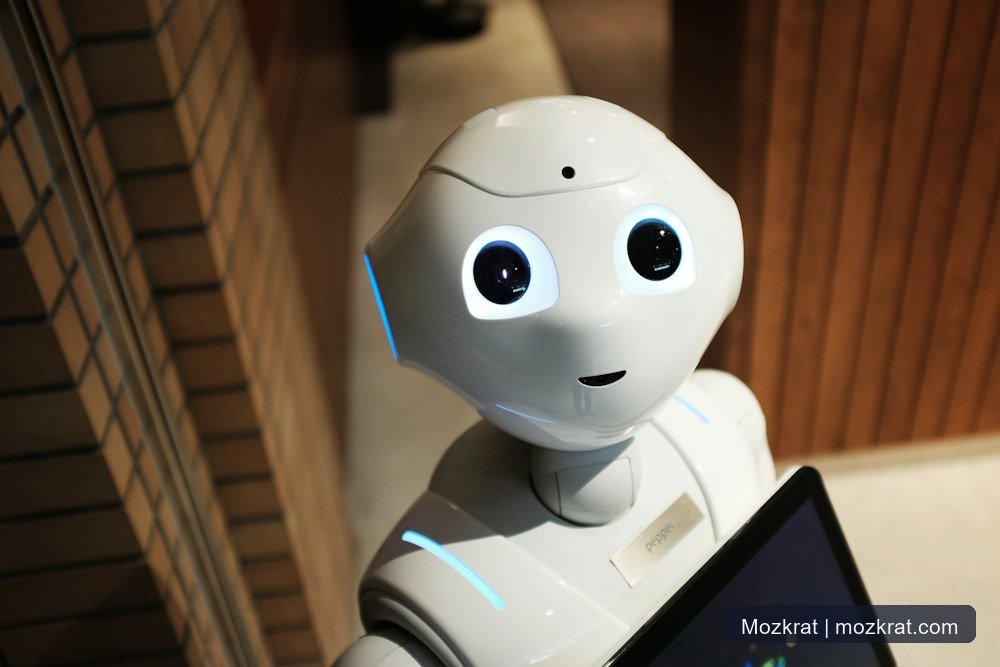 High-fidelity digital simulation lab advancing STEM robotic engineering.
Democratizing Hazardous and Cost-Prohibitive STEM Laboratories
Beyond medical faculties, immersive simulation is tearing down economic barriers across physical chemistry, nuclear physics, and aerospace engineering. Traditional university chemistry wet-labs require millions of dollars in toxic chemical disposal, ventilation hoods, and hazardous material insurance policies, which severely restricts which experiments undergraduates can personally conduct.
In virtual molecular laboratories, students manipulate hazardous radioactive isotopes, simulate explosive exothermic reactions, and observe atomic bonding dynamics at the femtosecond scale with zero physical danger and zero chemical waste. Engineering students can dismantle a multimillion-dollar commercial jet turbine blade by blade, test thermal stress fatigue under simulated Mach 3 flight conditions, and instantly reset the simulation with the click of a button.
- Safe exploration of hazardous chemical, radiological, and high-voltage electrical experiments
- Infinite repeatability allowing students to iterate until conceptual mastery is achieved
- Massive institutional savings on physical consumable reagents and specialized laboratory apparatus
Augmented Reality (AR) in Field Work and Industrial Apprenticeships
While fully enclosed Virtual Reality transports students into synthetic worlds, Augmented Reality (AR) superimposes digital intelligence onto the physical environment. In geology, civil engineering, and architecture, AR is transforming field study.
Civil engineering students examining a municipal concrete bridge point AR tablets at the structure to see real-time color-coded strain tensor overlays, subterranean foundation anchor points, and simulated earthquake resonance patterns superimposed directly onto physical concrete pillars. In archaeology, students excavating historical dig sites view historical structural reconstructions overlaid in exact geographic alignment with excavated ruins, bridging centuries of history in a single visual perspective.
 STEM university cohort collaborating in an interactive spatial computing environment.
Addressing Simulator Sickness, Accessibility, and Hardware Parity
Despite its breathtaking promise, the widespread rollout of immersive technology presents technical and physiological challenges. Early generations of headsets triggered vestibular disorientation and simulator sickness among sensitive users. In 2026, advances in high-refresh micro-OLED displays (120Hz+) and sub-millimeter eye-tracking have virtually eliminated motion latency.
Institutions must also ensure accessibility parity. Spatial simulations are engineered with wheelchair-accessible seated navigation modes, customizable color-blindness color filters, and dynamic spatial audio cues that guide visually impaired scholars through tactile virtual landscapes, guaranteeing that immersive pedagogy serves every enrolled student.
Frequently Asked Questions (FAQ)
Q: Will virtual reality simulations replace physical cadaver dissection in medical schools?
A: No. Virtual reality serves as a powerful synergistic amplifier, not a total replacement. Students master anatomical geography and surgical choreography in VR first, arriving at physical cadaver dissections with significantly deeper foundational confidence.
Q: Are spatial computing headsets cost-effective for public university budgets?
A: Yes. When evaluated against the recurring millions of dollars required to maintain physical cleanrooms, chemical reagents, cadaver preservation facilities, and specialized machinery, a fleet of spatial headsets represents an immensely cost-effective capital investment.
Q: Can students with corrective lenses comfortably use academic VR headsets?
A: Modern spatial headsets feature magnetic custom prescription lens inserts and expansive eye relief adjustments, ensuring that students with spectacles experience crystal-clear optical clarity.
Final Thoughts & Looking Ahead
Immersive simulation in medical and STEM education represents a historic quantum leap in human training. By liberating students from the limitations of physical danger, geographical distance, and astronomical equipment costs, virtual reality empowers the next generation of healers, scientists, and engineers to explore the frontiers of human knowledge with fearless curiosity and unprecedented mastery.