The escalating cost of higher education and the resulting multi-trillion-dollar student debt crisis represent one of the most pressing socio-economic challenges of the twenty-first century. For millions of young scholars and families, the pursuit of a university degree—historically the most reliable engine of upward social mobility—has increasingly become a perilous financial gamble leading to decades of crushing indebtedness. However, the crisis is not uniform worldwide. While nations like the United States have relied heavily on market-driven tuition and private borrowing, other advanced economies across Europe, Oceania, and Asia have engineered radically different public funding architectures. In 2026, comparative public policy reveals stark lessons regarding how state investment, income-contingent loans, and targeted subsidies can preserve collegiate accessibility while maintaining fiscal sustainability. This comprehensive policy analysis compares global higher education finance models.
 University administration hall deliberating institutional tuition and financial aid policies.
The United States Model: Market Commodification and the $1.7 Trillion Debt Burden
The United States represents the quintessential high-tuition, high-aid higher education financing model. Over the past four decades, state legislatures systematically disinvested from public university appropriations, shifting the primary financial burden of funding higher education directly onto students and families. As universities competed for affluent students by constructing luxury amenities and expanding administrative bureaucracies, tuition costs soared at triple the rate of standard consumer inflation.
To bridge the gap, the federal government expanded access to student loans without imposing corresponding price caps on institutional tuition hikes. The result has been catastrophic: a national student loan portfolio surpassing $1.75 trillion, burdening over 43 million borrowers. This structural debt delay prevents young adults from purchasing homes, launching entrepreneurial businesses, or saving for retirement, exerting a profound drag on broader macroeconomic growth.
The Continental European Social Contract: Tuition-Free Higher Education as a Public Right
In stark contrast to the Anglo-American model, continental European nations—spearheaded by Germany, Austria, and the Scandinavian bloc—operate under the philosophical doctrine that higher education is an essential public infrastructure asset, functionally equivalent to public roads, universal healthcare, or national defense.
Furthermore, countries like Denmark, Sweden, and Norway provide enrolled university students with state-funded monthly living stipends (such as the Danish SU grant), ensuring that living costs do not deter talented individuals from disadvantaged socioeconomic backgrounds from pursuing full-time academic scholarship.
 Graduate student calculating financial loan repayment schedules on a laptop.
The Australian and British Approach: Income-Contingent Loan Frameworks
Positioned philosophically between the American private market model and European social democracy lies the Income-Contingent Loan (ICL) system, pioneered by Australia’s Higher Education Contribution Scheme (HECS) and subsequently adapted by the United Kingdom and New Zealand.
Under this hybrid framework, students attend university with zero upfront tuition expenses. The government covers institutional fees, and the graduate repays the debt through the national taxation system only after their post-graduation salary surpasses an audited income threshold (e.g., $55,000 AUD). Crucially, monthly repayments are capped as a small percentage of income (typically 3% to 8%), and if a graduate experiences unemployment, illness, or low earnings, their repayments automatically pause with zero penalty. Furthermore, remaining debt balances are forgiven after 25 to 30 years.
- Zero upfront tuition out-of-pocket costs at matriculation
- Automatic income-contingent repayments deducted through national payroll taxation
- Automatic loan cancellation after 25-30 years for graduates remaining in lower-paying public service roles
Targeted Free College: The Promise and Pitfalls of 'Last-Dollar' Grants
In response to public outcry over college affordability, dozens of US states and international regional governments have introduced 'Free College' or 'Promise' scholarship legislation. However, the precise policy mechanics determine whether these programs truly promote equity.
Many regional initiatives operate as 'last-dollar' scholarships, covering tuition only after federal Pell Grants and state aid are applied. Because low-income students already qualify for need-based tuition waivers, last-dollar programs primarily subsidize middle-class tuition while leaving low-income scholars struggling to pay for non-tuition necessities like food, housing, and textbooks. Progressive policy advocates emphasize that genuine affordability requires 'first-dollar' funding models that allow low-income students to apply grant aid directly toward essential living overhead.
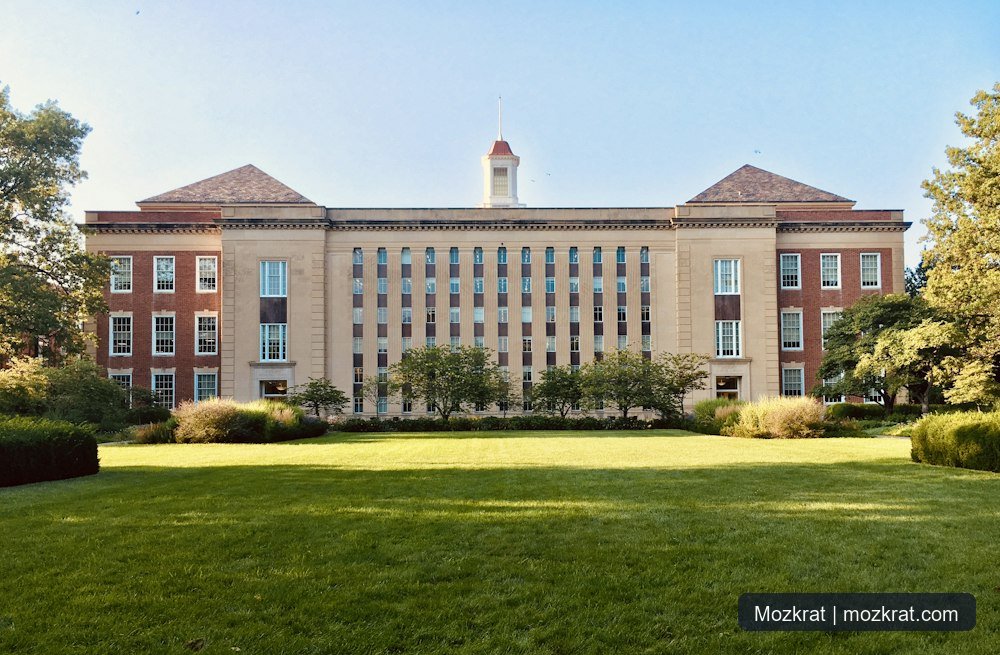 Historic university campus symbolizing the public good of universal higher education.
Policy Prescriptions for Sustainable Global Higher Education Finance
Achieving long-term higher education affordability requires systemic policy intervention rather than superficial band-aids. Forward-thinking governments must condition institutional public funding upon strict administrative cost containment and transparent graduate employment outcomes.
Furthermore, tax codes should be modernized to allow employers to contribute pre-tax funds toward employee student loan amortization. By treating public funding of colleges as an indispensable capital investment in national innovation, governments can dismantle the debt barrier and unleash the full economic potential of the rising generation.
Frequently Asked Questions (FAQ)
Q: Do European countries with tuition-free universities have higher general tax rates?
A: Yes. Nations like Germany and Denmark maintain higher progressive income taxes and VAT rates to finance world-class public infrastructure, including healthcare and tuition-free higher education.
Q: Why have US university costs risen so much faster than inflation?
A: Primary drivers include massive state government disinvestment from public university budgets, rapid growth in non-instructional administrative personnel, and subsidized federal loan policies that enabled universities to raise tuition without losing enrollment.
Q: What is the difference between federal student loans and private student loans?
A: Federal loans feature income-driven repayment plans, public service loan forgiveness options, and deferment protections. Private bank loans carry volatile interest rates and virtually zero hardship forgiveness protections.
Final Thoughts & Looking Ahead
The global debate surrounding higher education finance demonstrates that crushing student debt is not an inevitable economic reality, but the direct consequence of specific public policy choices. By learning from successful international models that combine state investment, income-contingent repayment safety nets, and institutional cost accountability, modern societies can restore higher education as an open gateway to shared human prosperity.